by Iceman 29 » Tue Feb 25, 2025 3:30 am
Drawing of the hoses and their unloading/loading racks.
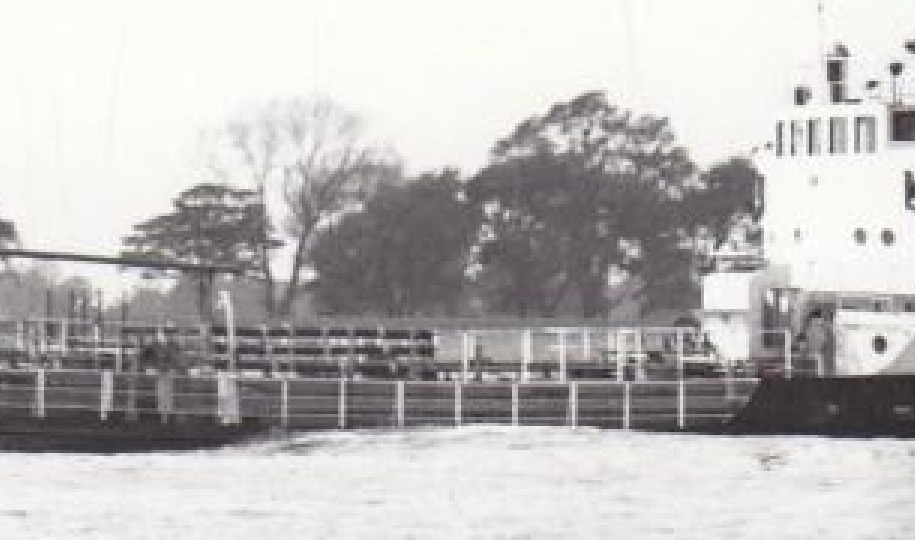
These small vessels are quite adaptable with their shallow draughts and can unload just about anywhere. Along a beach or a normal quay in lorries (already done when the Pointe � Pitre (Guadeloupe island)was blocked for several days, unloading at Basse-Terre in tanker lorries, in the 1980s, by order of the prefect).
This is why they are sometimes also equipped with reel-mounted hoses that are pulled ashore, with the hose floating between two waters.
https://www.northridgepumps.com/article ... case-study
Typical fuel unloading procedureShip moored in port unloading fuel
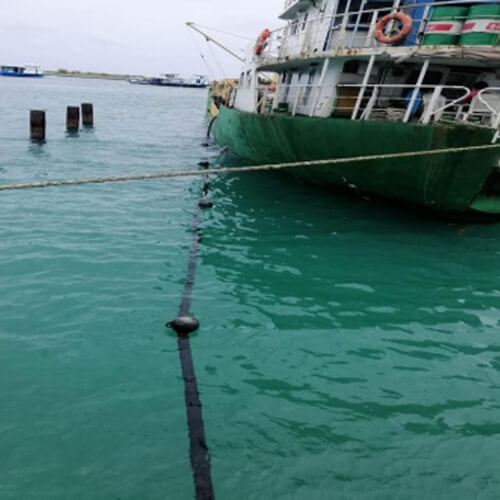
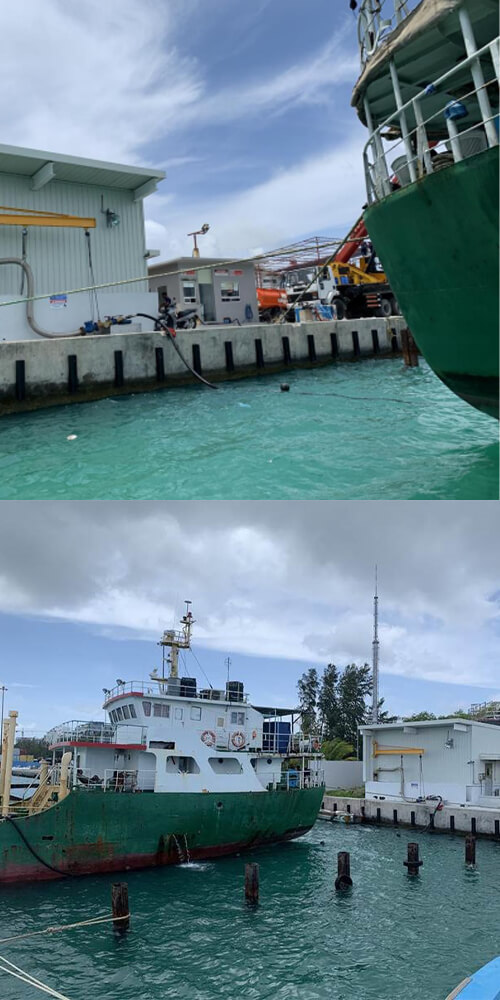
When unloading fuel, a vessel approaches the pumping station and is held in place by guide cables against the quay and its anchor. The photos in this article show one of the ships moored in port with cables and the ship's anchor securing the vessel in place, with a hose extending towards the pumping station.
To enable unloading, a large diameter flexible hose (typically 6 inches) is connected from the vessel to the pumping station, with the hose supported by buoys in the water to ensure it stays afloat. The use of flexible hose ensures that the pipework is not stressed or in danger of breaking as the vessel floats in the ocean with the waves or tides.
The flexible hose is then connected to a fixed pipe on land, ready to start transferring fuel, once the installation has been earthed to prevent the build-up of static electricity.
Once the delivery line is connected to the vessel, the on-board tank valve and pump are opened. The unit is started slowly, allowing it to prime and fill with liquid before increasing speed. Controls are usually in place to allow separate tanks to be filled, as one pump can usually be used to feed several tanks and in our customers' installation there were a total of four 800M�H LFO storage tanks.
Ships don't always dock to unload their cargo of fuel. They can also unload their cargo on offshore mooring buoys (CALM buoys) or single point mooring (SPM) systems, which allow a vessel to unload its liquid cargo without docking. This solution has the advantage of reducing port congestion and avoiding the need for pilots to come on board to guide ships. In addition, it allows larger ships to make deliveries to shallow-draught ports that would otherwise be unaccommodating, or to ports where ice formation can occur.
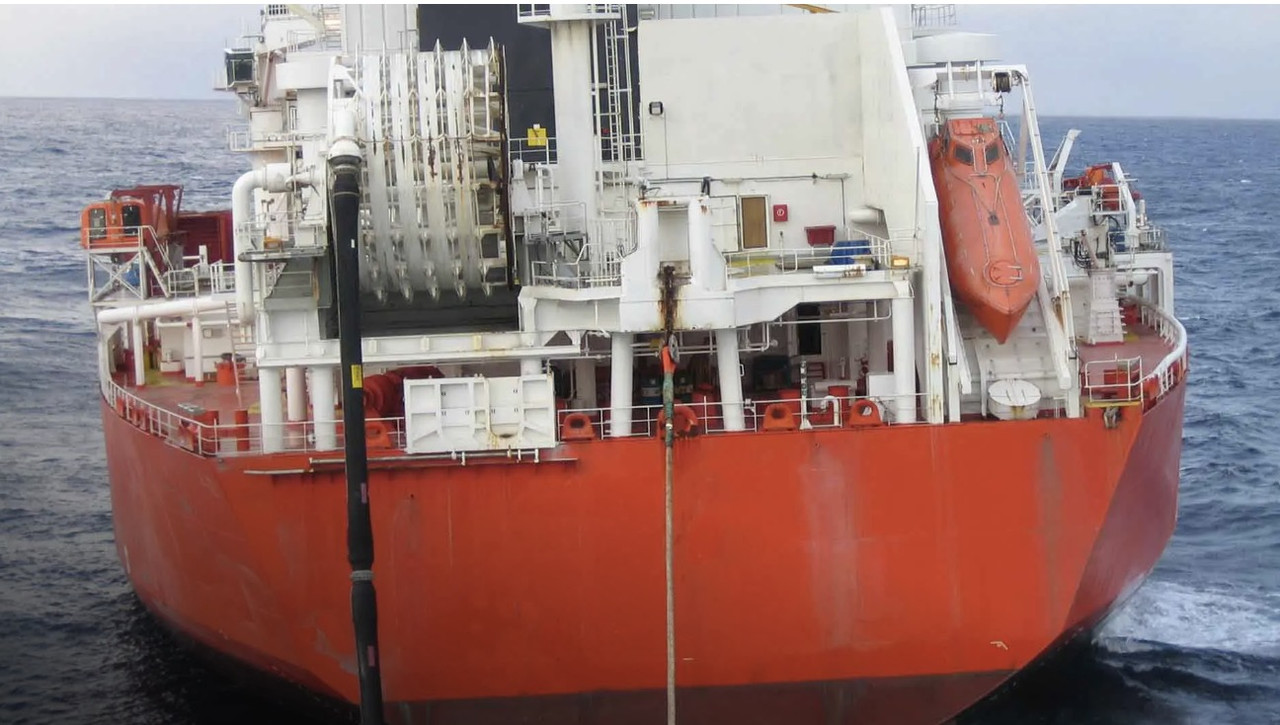
That's how it was done in some of the small Caribbean islands that don't have a quay or a port, in my day.
All that's left to do is 3D print the design:
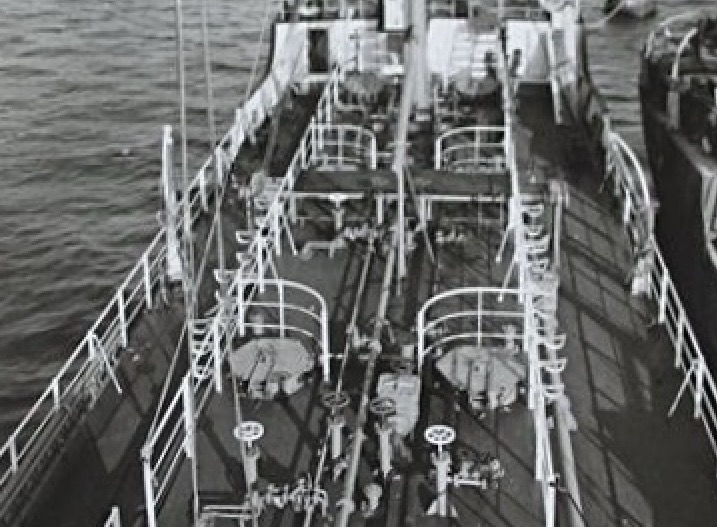
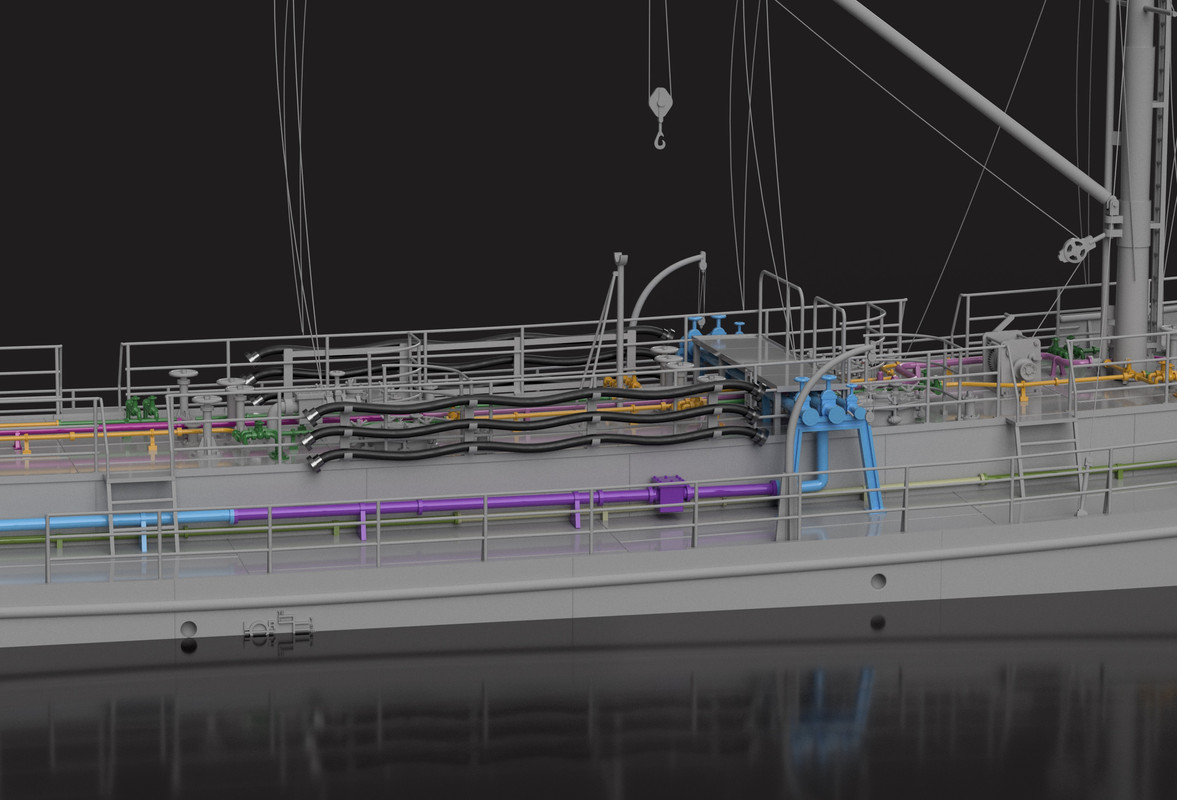
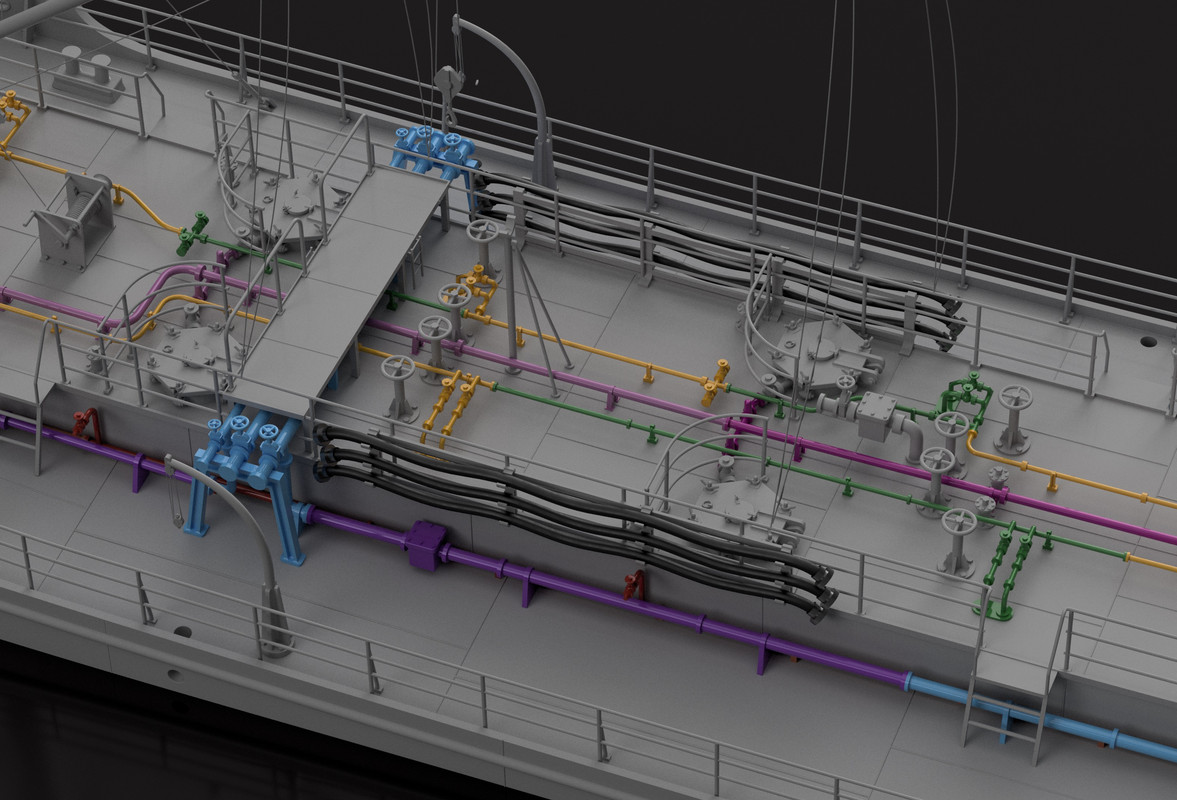
Drawing of the hoses and their unloading/loading racks.
These small vessels are quite adaptable with their shallow draughts and can unload just about anywhere. Along a beach or a normal quay in lorries (already done when the Pointe � Pitre (Guadeloupe island)was blocked for several days, unloading at Basse-Terre in tanker lorries, in the 1980s, by order of the prefect).
This is why they are sometimes also equipped with reel-mounted hoses that are pulled ashore, with the hose floating between two waters.
https://www.northridgepumps.com/article-363_unloading-marine-fuel-case-study
[i]Typical fuel unloading procedureShip moored in port unloading fuel
When unloading fuel, a vessel approaches the pumping station and is held in place by guide cables against the quay and its anchor. The photos in this article show one of the ships moored in port with cables and the ship's anchor securing the vessel in place, with a hose extending towards the pumping station.
To enable unloading, a large diameter flexible hose (typically 6 inches) is connected from the vessel to the pumping station, with the hose supported by buoys in the water to ensure it stays afloat. The use of flexible hose ensures that the pipework is not stressed or in danger of breaking as the vessel floats in the ocean with the waves or tides.
The flexible hose is then connected to a fixed pipe on land, ready to start transferring fuel, once the installation has been earthed to prevent the build-up of static electricity.
Once the delivery line is connected to the vessel, the on-board tank valve and pump are opened. The unit is started slowly, allowing it to prime and fill with liquid before increasing speed. Controls are usually in place to allow separate tanks to be filled, as one pump can usually be used to feed several tanks and in our customers' installation there were a total of four 800M�H LFO storage tanks.
Ships don't always dock to unload their cargo of fuel. They can also unload their cargo on offshore mooring buoys (CALM buoys) or single point mooring (SPM) systems, which allow a vessel to unload its liquid cargo without docking. This solution has the advantage of reducing port congestion and avoiding the need for pilots to come on board to guide ships. In addition, it allows larger ships to make deliveries to shallow-draught ports that would otherwise be unaccommodating, or to ports where ice formation can occur.[/i]
[img]https://www.northridgepumps.com/upload/editor/30%20meters%20of%20flexible%20pipe%20is%20laid%20temporarily%20every%20time%20to%20unload%20fuel%20from%20boat-22112111363658543.jpg[/img]
[img]https://www.northridgepumps.com/upload/editor/Vessel%20moored%20in%20port%20unloading%20fuel-22112111375085386.jpg[/img]
[img]https://www.northridgepumps.com/upload/editor/Vessel%20moored%20in%20port%20unloading%20fuel-22112111375085386.jpg[/img]
[url=https://postimg.cc/zbj7NqR2][img]https://i.postimg.cc/NFhz1MGt/Capture-d-e-cran-2025-02-24-a-22-03-51.jpg[/img][/url]
That's how it was done in some of the small Caribbean islands that don't have a quay or a port, in my day.
All that's left to do is 3D print the design:
[url=https://postimages.org/][img]https://i.postimg.cc/3RJ3GtR7/Capture-d-e-cran-2025-02-24-a-11-48-45.jpg[/img][/url]
[url=https://postimages.org/][img]https://i.postimg.cc/JhQ1tfRP/Capture-d-e-cran-2025-02-24-a-11-49-08.jpg[/img][/url]
[url=https://postimg.cc/PpwgtpMf][img]https://i.postimg.cc/KzqxDtkT/Capture-d-e-cran-2025-02-24-a-13-34-58.jpg[/img][/url]
[url=https://postimg.cc/CnpWdhvG][img]https://i.postimg.cc/mkPRXhC5/Capture-d-e-cran-2025-02-24-a-15-02-58.jpg[/img][/url]