My page Royal Navy Ship’s Boats of WWII is basically the result of my trying to figure out the taxonomy of auxiliary craft with the two larger launches the largest unknowns remaining: the 42 ft sailing launch with auxiliary engine and the 45 ft motor launch with auxiliary sails. The Manual of Seamanship indicates these two launches were carried by battleships, battle cruisers and large repair ships; I found pictures of the 45ft variant aboard Hood, the Nelsons and some of the R-class battleships. The manual notes the standard 45ft type as obsolescent as it was superseded by a light type for capital ships with gantry cranes and aircraft facilities. Capital ships with a tripod mast and a derrick could still use the standard type—as well steam pickets— although it appears they were gradually replaced throughout the war.
The 42ft sailing launch is well documented but the version with an auxiliary engine is not and appears even more rare than the 45ft launch. The 36 ft launch (pinnaces) are of comparable size and resemble these larger launches from any distance, being also of sturdy construction and all three have sailing thwarts (or mast carlings), i..e, two small planks running longitudinally on either side of the mast position; this makes these craft very difficult to tell apart.
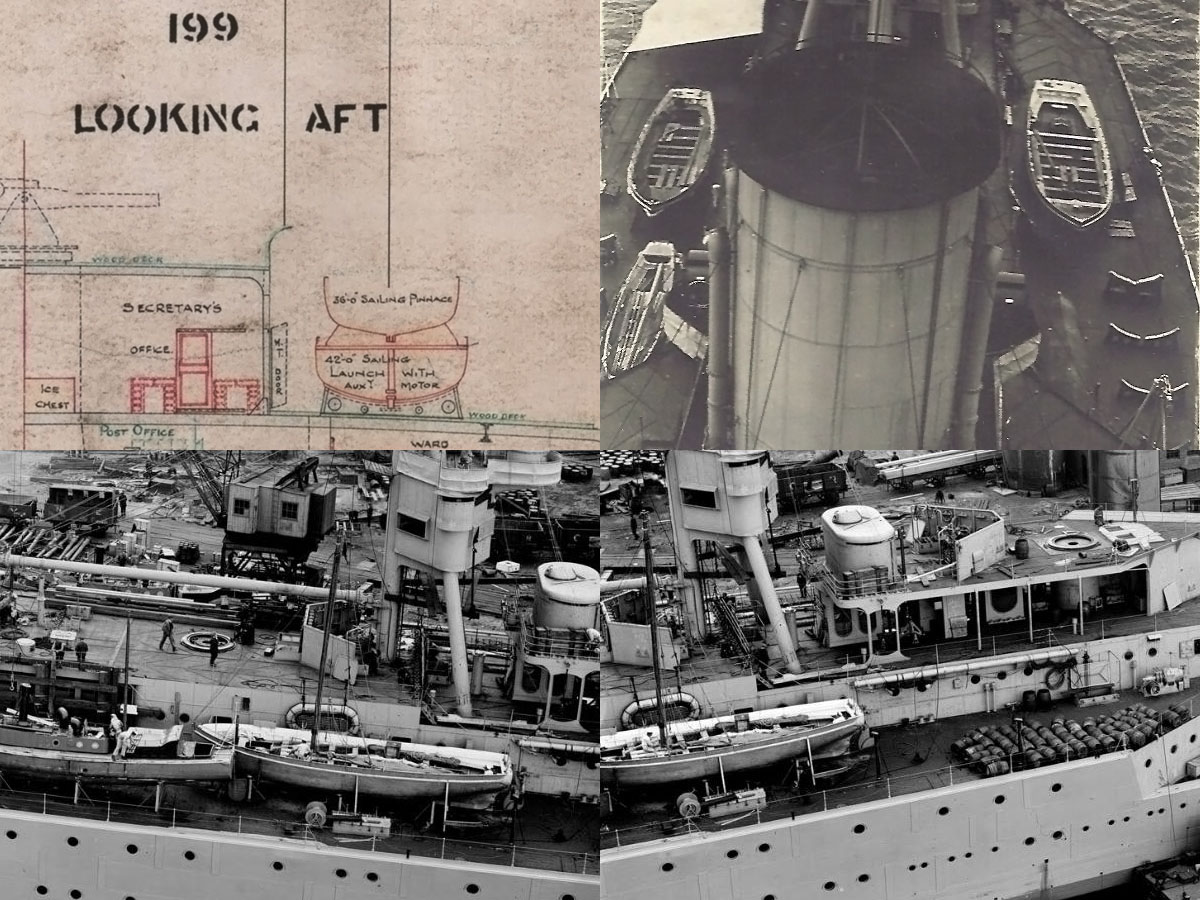
Official plans show the 42ft launch with motor aboard both Hood and Repulse; the latter shown here. The top right shows images shows the 36 ft launch (left, probably) and 42 ft (right) indicating how much these boats are alike. The bottom row shows the launch with its mast raised.
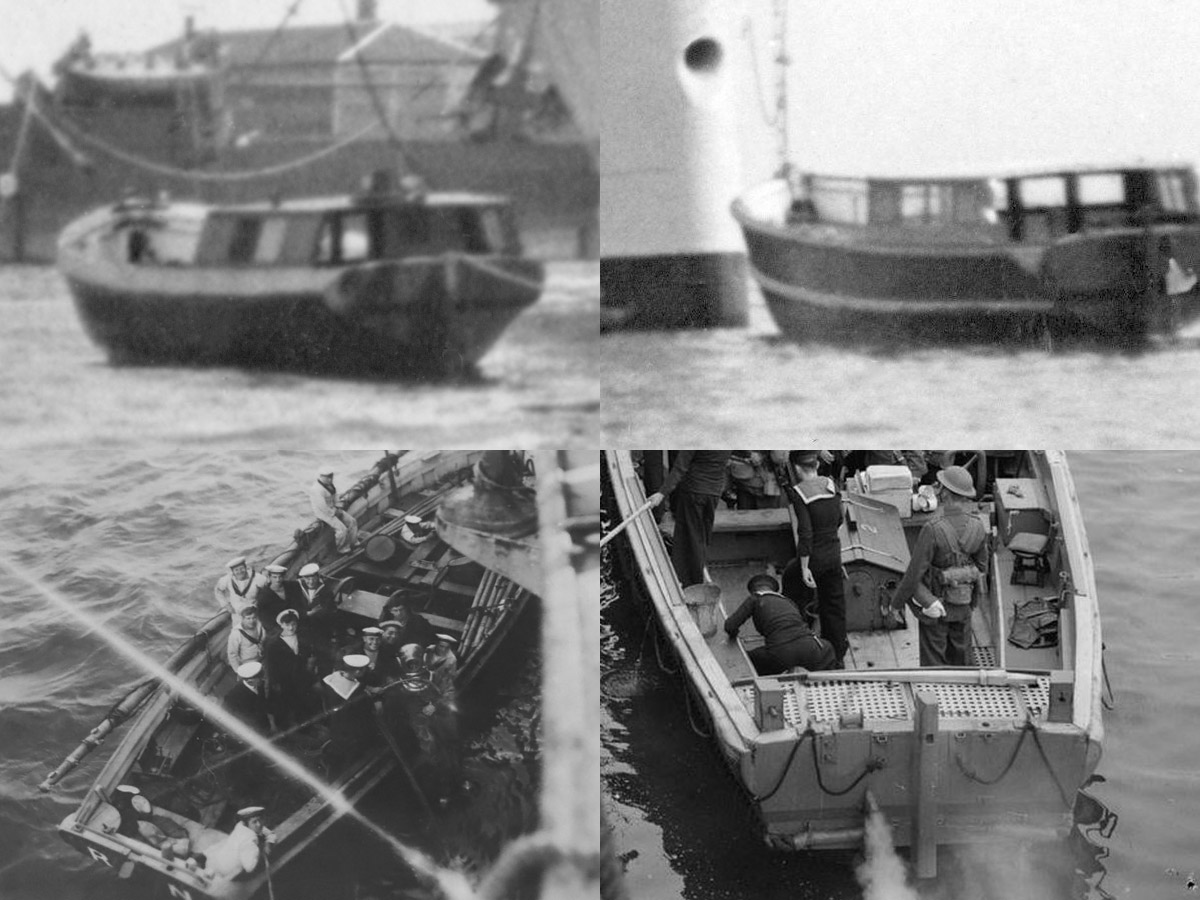
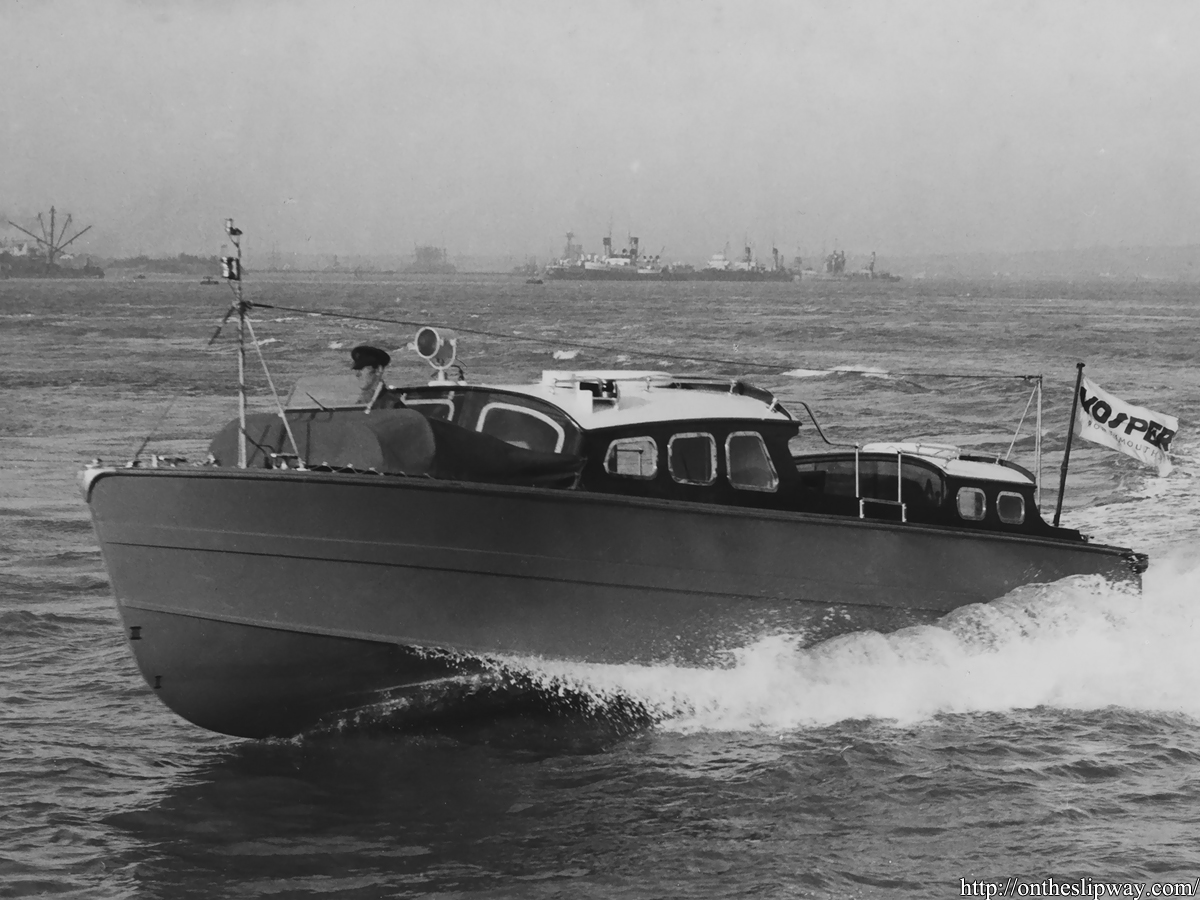
The AOTS Hood by John Roberts mentions there are two tell-tale signs to separate the 45ft launch from others as it has a double row of rubbers (or rubbing strakes) with the top rubber running along the very top of the hull; other launches have a single rubber running some distance below the wash strake; even from a top view you should be able spot the height of the top rubber. For example, top row: at left (<em>probably</em>) Renown's 42ft launch with a single rubber and at right (certainly) Hood's 45 ft launch with a double rubber. Both types seem to have aft cabin that is in all likelihood detachable as these cabins are not always visible in all photographs (plus, Hood's launch has a cutter stored on top that otherwise won't fit). The 45ft launch also has two small bollards / binding posts on its stern that the 42ft launch lacks. Bottom left shows a 36ft or 42 launch (probably 36 ft) and at right Rodney's 45 ft launch (certainly) with the stern bollards clearly visible.
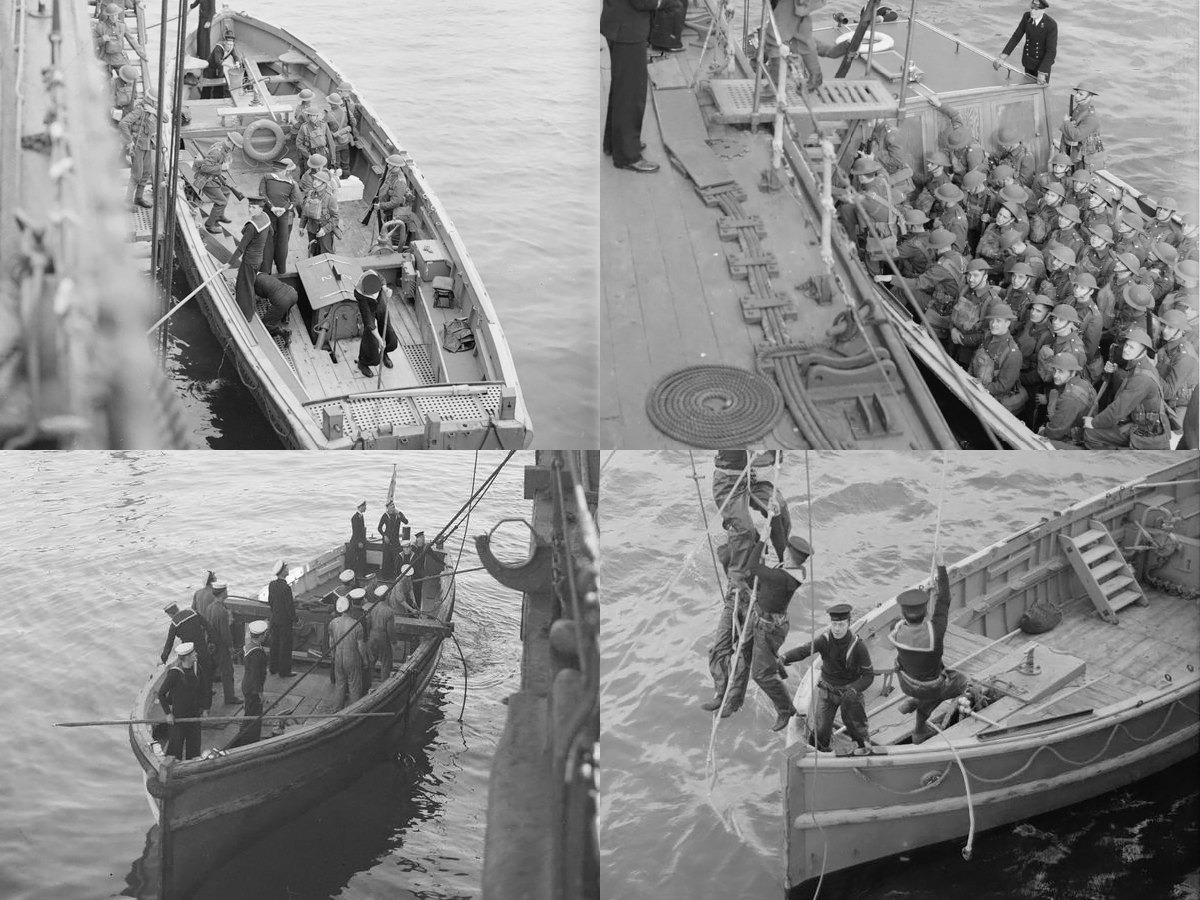
This compilation of IWM images A 1239/1424/1519/1540 shows Rodney's 45ft launch; stern bollards, double rubbers, top rubber at the height of the wash strake. Here the inside is very well visible. Thwarts are not always present but bottom right shows a few supports on the rising, so I suppose they were portable. Note that the floor is very sturdy and solid, no bottom boards here.

Top row some details of images showing the 45ft launch, from Ramilles (left) and Rodney (right). The bottom row are the few decent shots of HMS Hood's 42ft launch, one of which showing the inside.
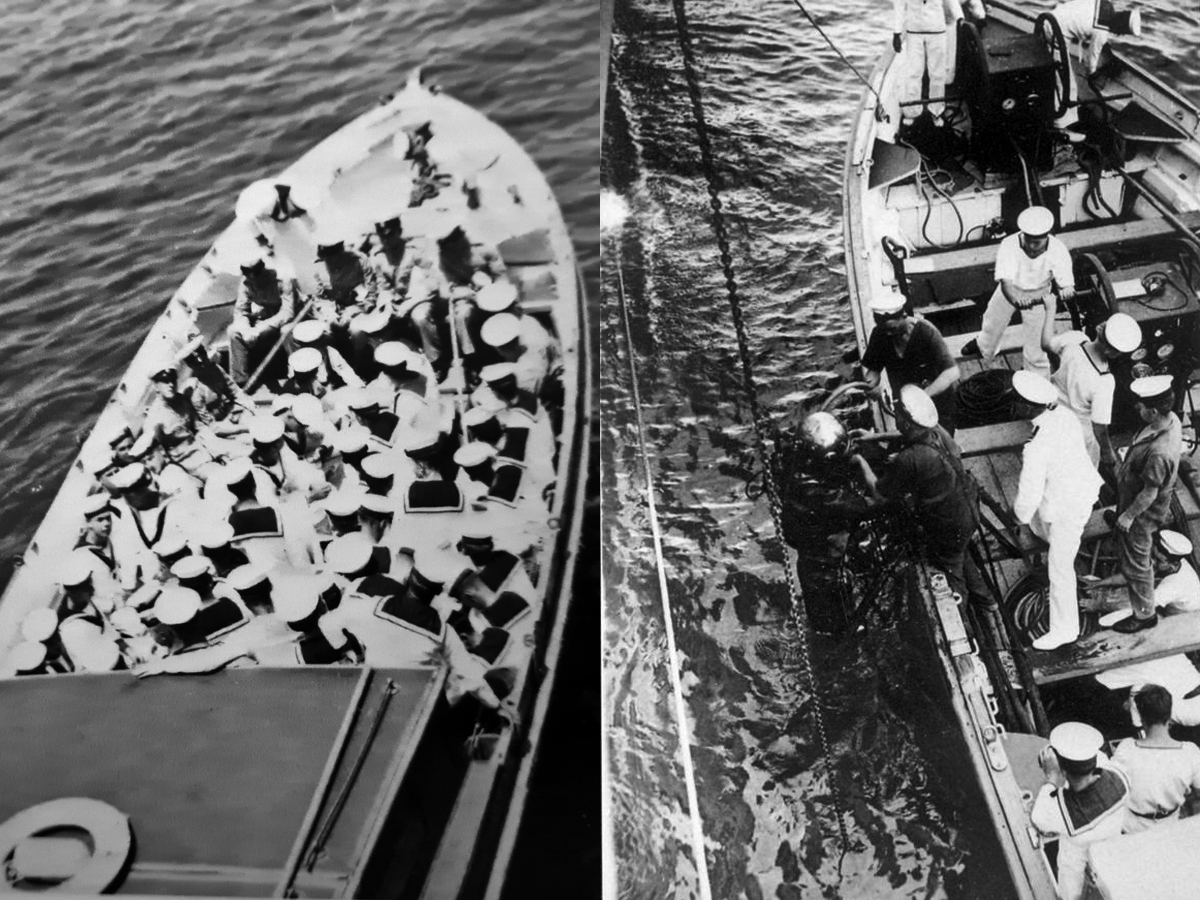
Now these two images of Hood's launches are the source of the confusion as there are so very alike but are in fact not the same launch . At left Hoods 42 launch, and right the 45 ft launch, an image I only recently rediscovered Source: RN Communications Branch Museum/Library, Godfrey Dykes photographic collection(reproduced with permission). The rubber is below/at the wash strake at left/right, respectively. Most of the inside for the left photograph is blocked. Note that both have that small platforms (steps?) in the bow region (45ft launch also in the rear) and a cabin aft, but the cabin roof has a corticene top (left) or canvas (right). The differences between the two are otherwise very small. One wonders Hood carried two different versions at all, but that might have been a matter of availability. The 45ft launch had a more solid support in the bow here fitted with pumps for the diver, similar to the platform in Rodney's 45ft launch, though placed far more forward (here is where a 3D model below is really useful in shifting parts around).
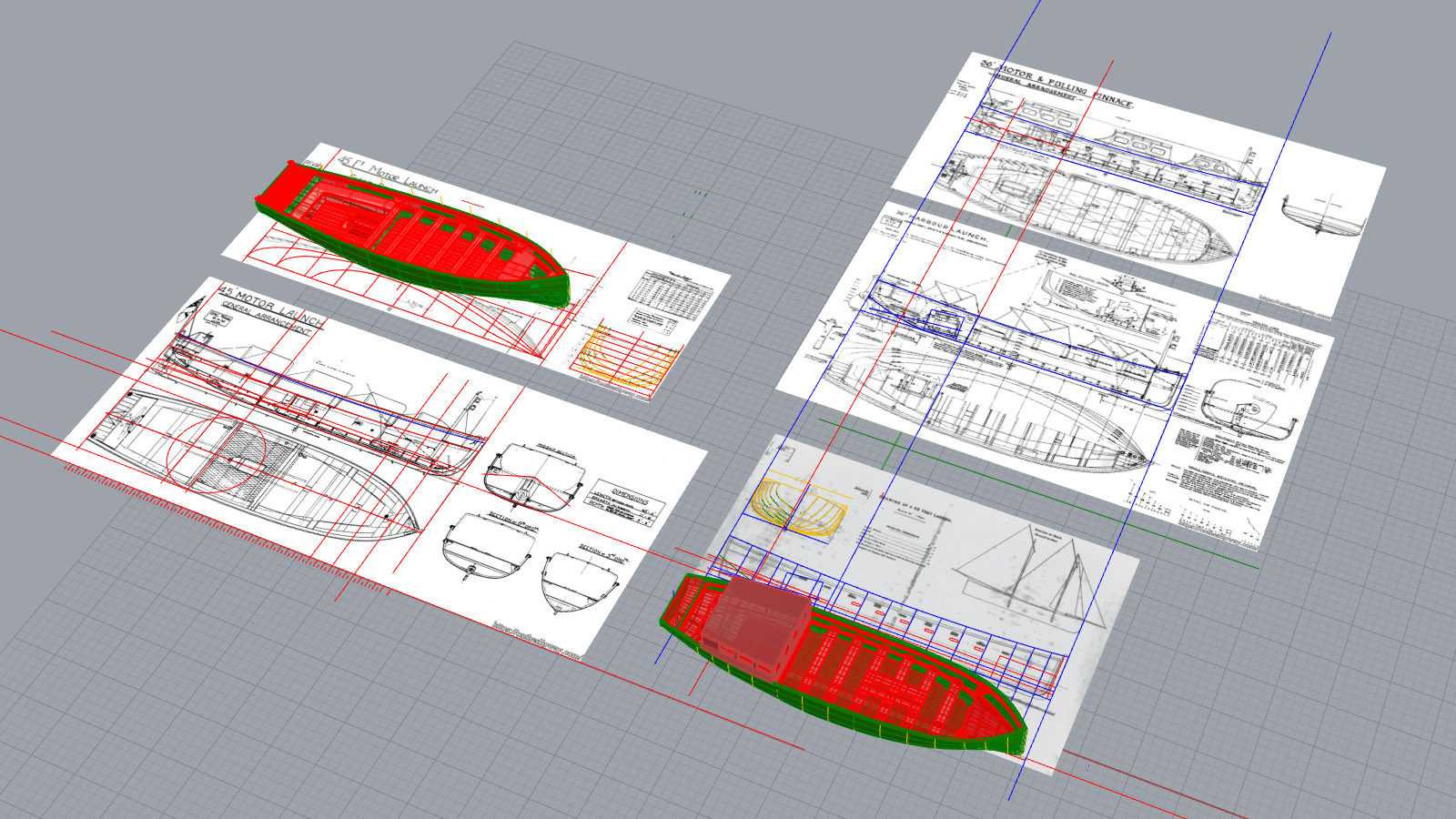
I started a small reconstruction in Rhino that can be used as a general arrangement for the actual model with most of the main dimensions and layout sorted out. The 42ft launch without motor is very well documented and I found a small lines plan to be used as a basis. For the motorized version the stern was adapted to provide clearance for the propeller matching the 36ft stern side views. I used the lines of the 45ft light type as is.
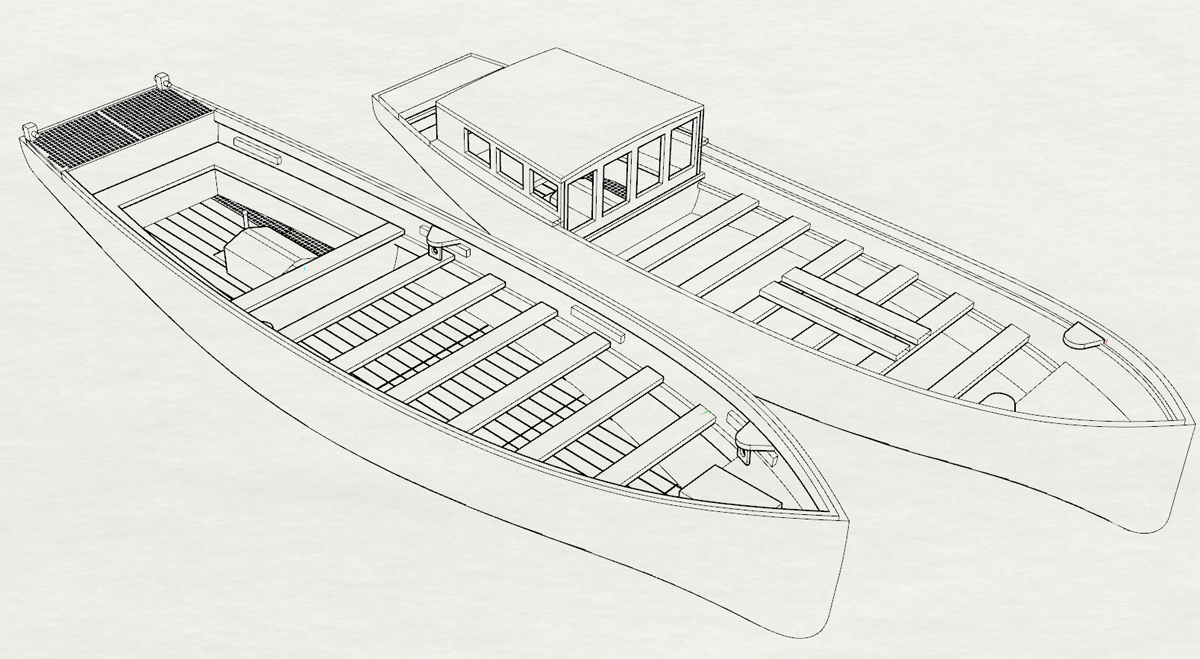
The interior was then guessed based on photographs and what drawings and video footage I found of the 36, 42, and 45 ft launches. The cabin for the 42ft launch is visible on one pic taken in 1941 so I decided to add it to not make these barges too alike. As the 45ft launch will hold a cutter it will remain cabinless, using Rodney's version for inspiration (even though---of course---it is not the same as Hood's). The end result is quite different from most of the 3D printed products now available, for what it is worth of course
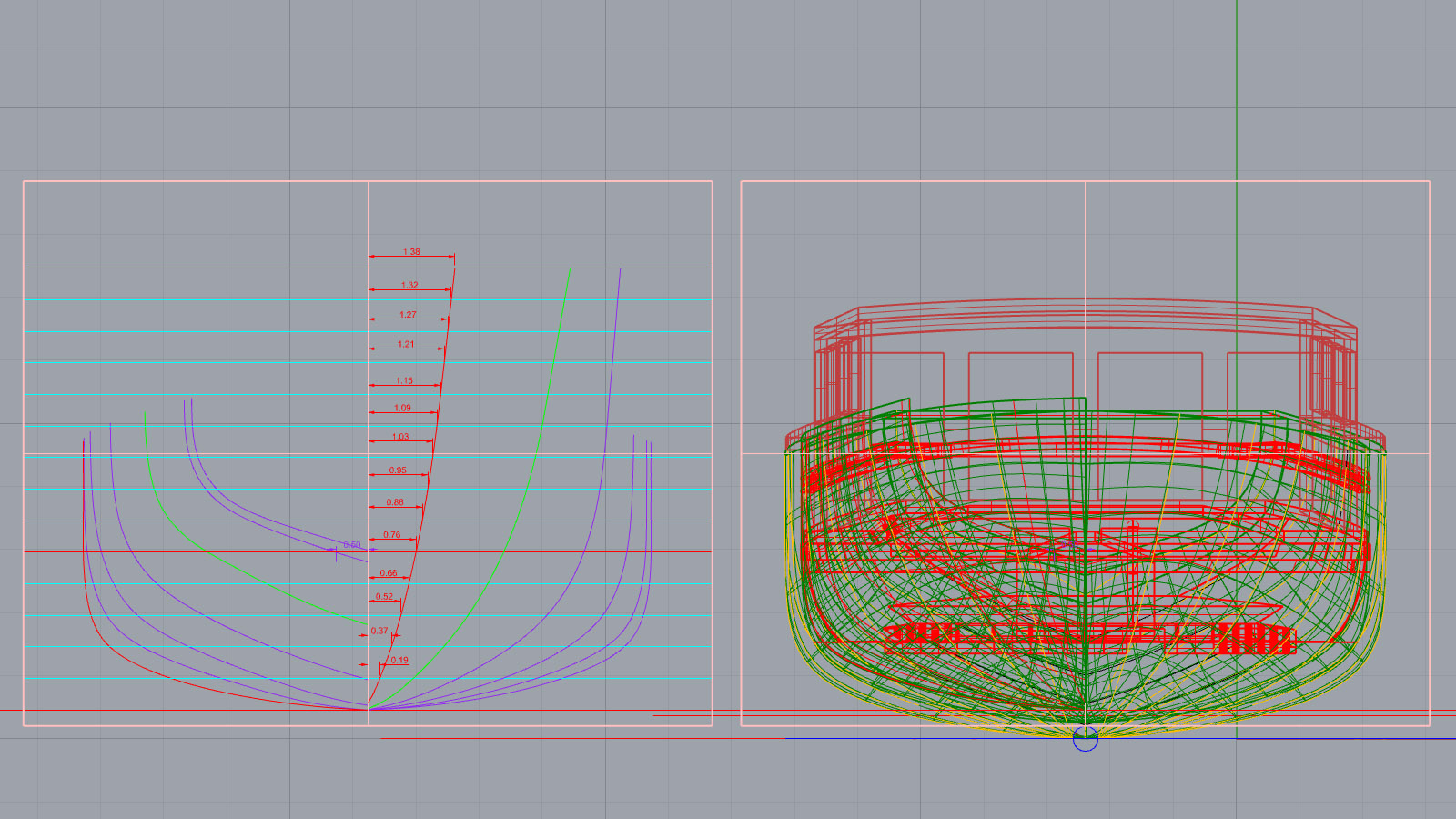
Having the hull in 3D made it easy to create new lines at exact spacing matching Evergreen strips. With a surface description it was very easy to create an offset surface of about 0.25mm the hull thickness; of course a trivial step with all the uncertainties involved with a vacuum forming ending up at whatever, but it is fun to do. Making a hull surface in 3D is going to be my default approach for the next sets of boats.
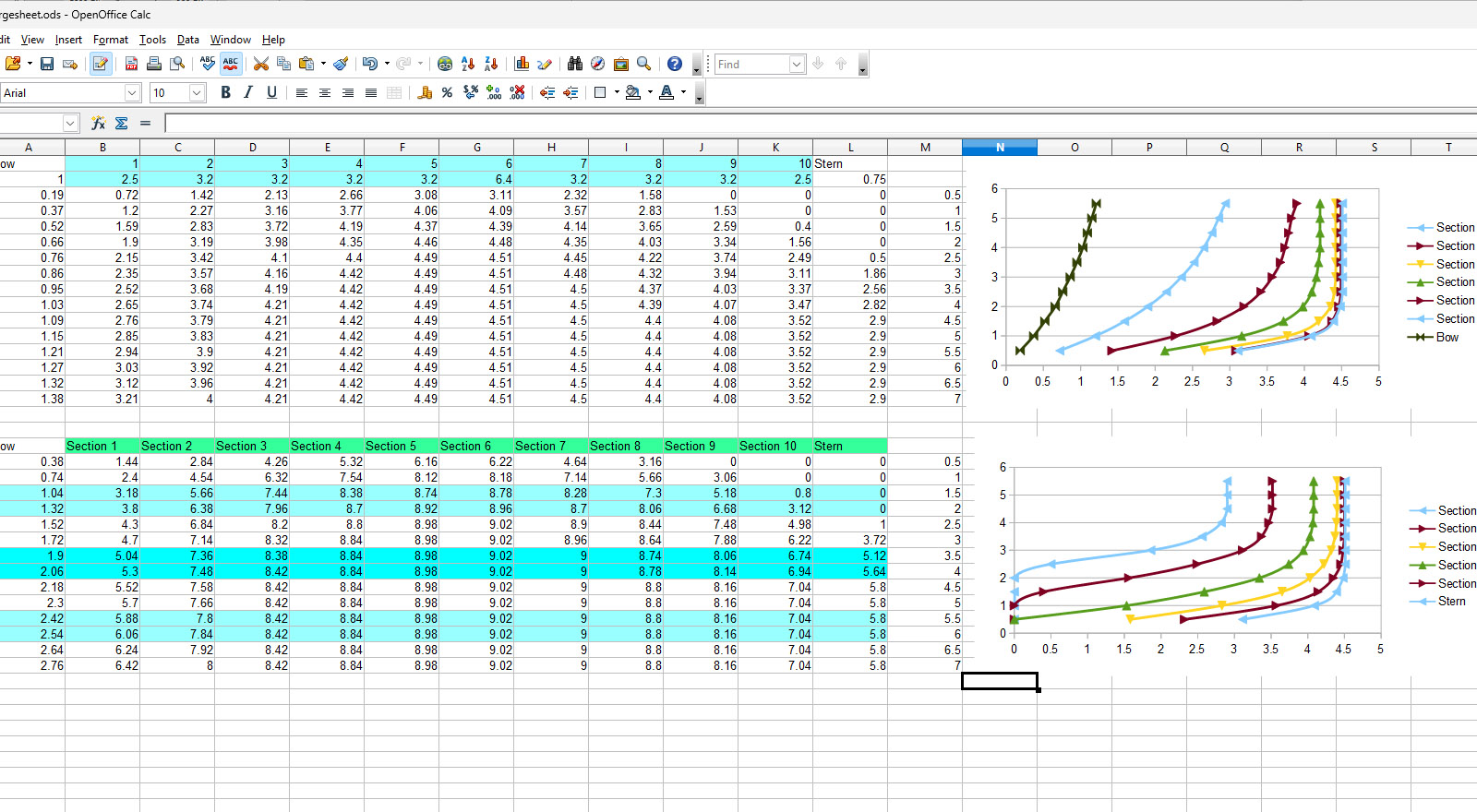
The line widths were dutifully typed over into Open Office with a small chart to check for typos (sadly needed).
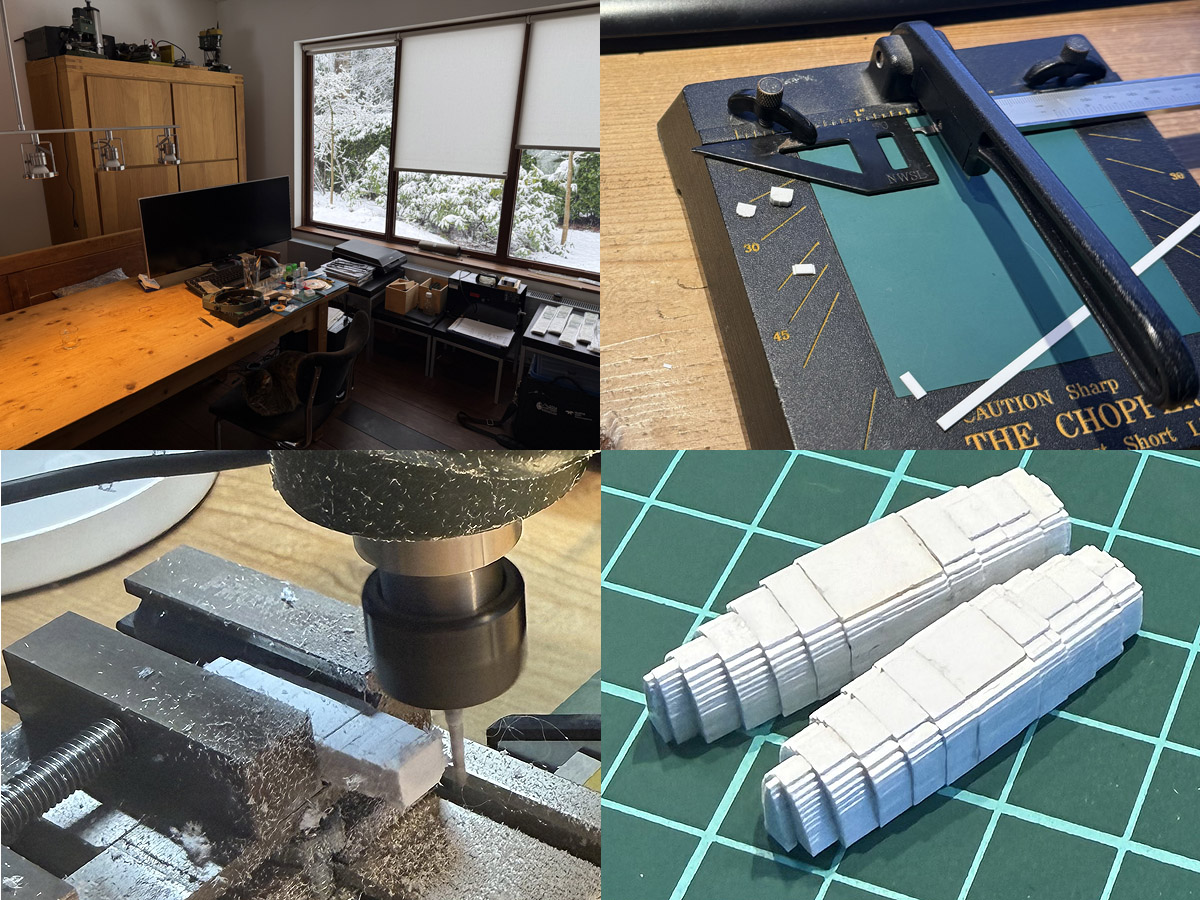
I hadn't done any hobbying for a while, so the hobby room (kitchen table) was restored for production; this is where I do all modeling in a small corner of our living room using a very simple setup. The strips were cut to size using the depth probe of the calipers to set the cutter accurate to within a tenth of a mm quickly and reliably. All strips were always glued pairwise giving the glue time to set and then added block per block. For the 2nd hull I added a slightly finer bow and stern slice for more guidance, so the 1st hull was slightly shortened by my milling machine with two new slices added. The evergreen strips per type differ the tiniest bit in thickness per width, and do not stack up to the same height; the floor or the hulls was taken as 'zero', with a few additional layers above the gunwhale. These are the rough plugs for vacuum forming.


 . Looking forward to see those hulls ready after the shaping phase and the vacuum forming. Keep up the excellent work!






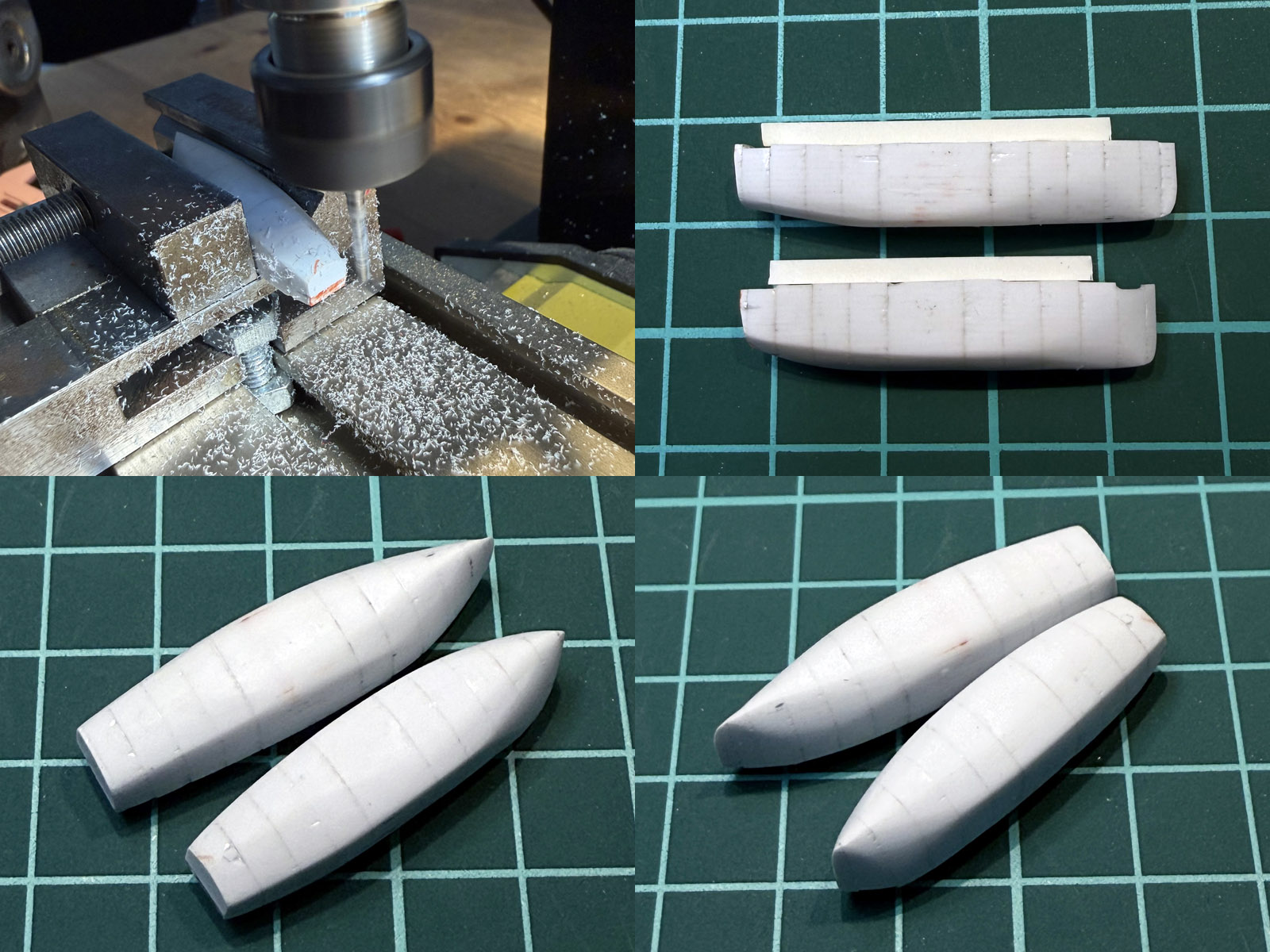
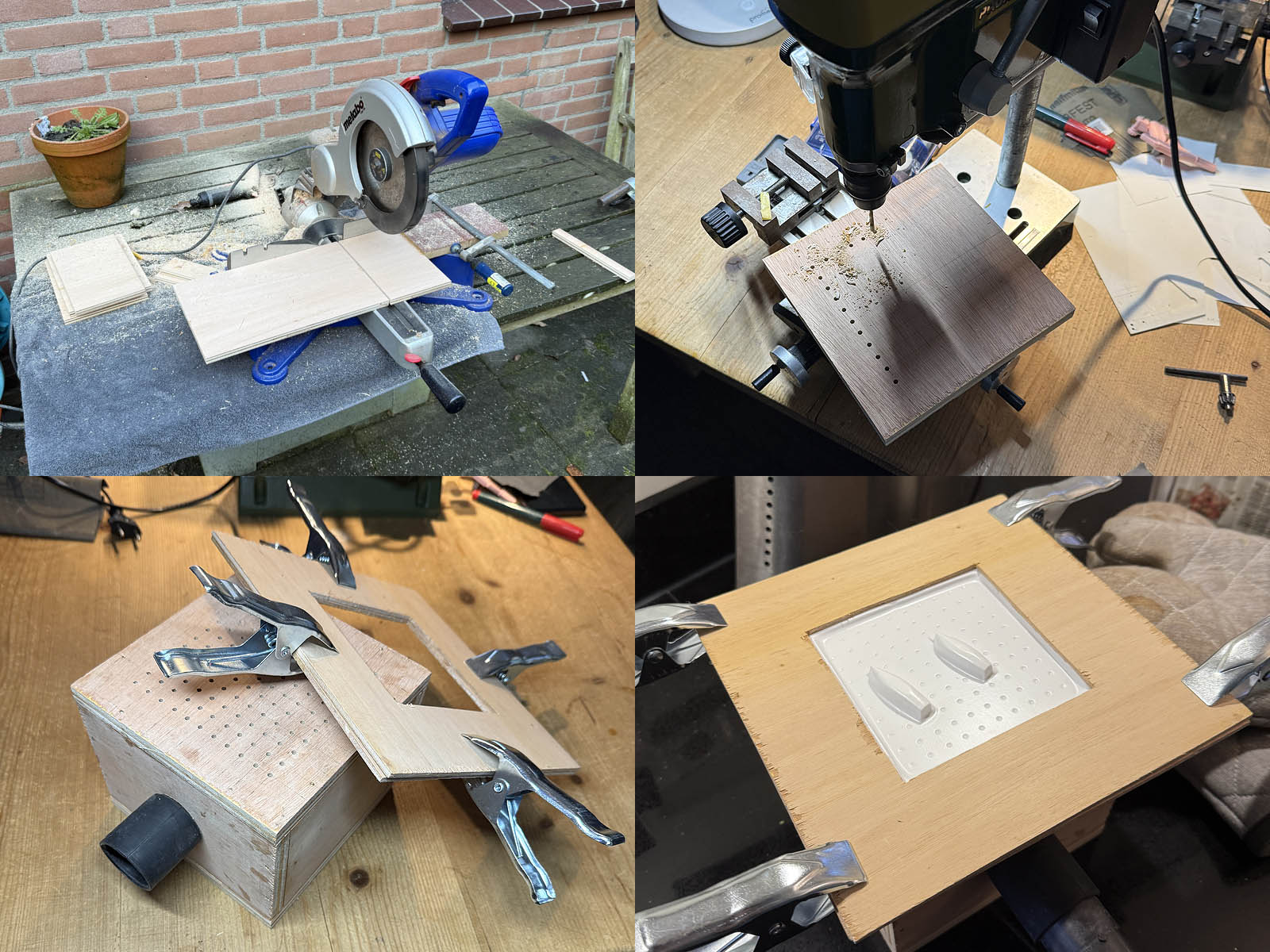
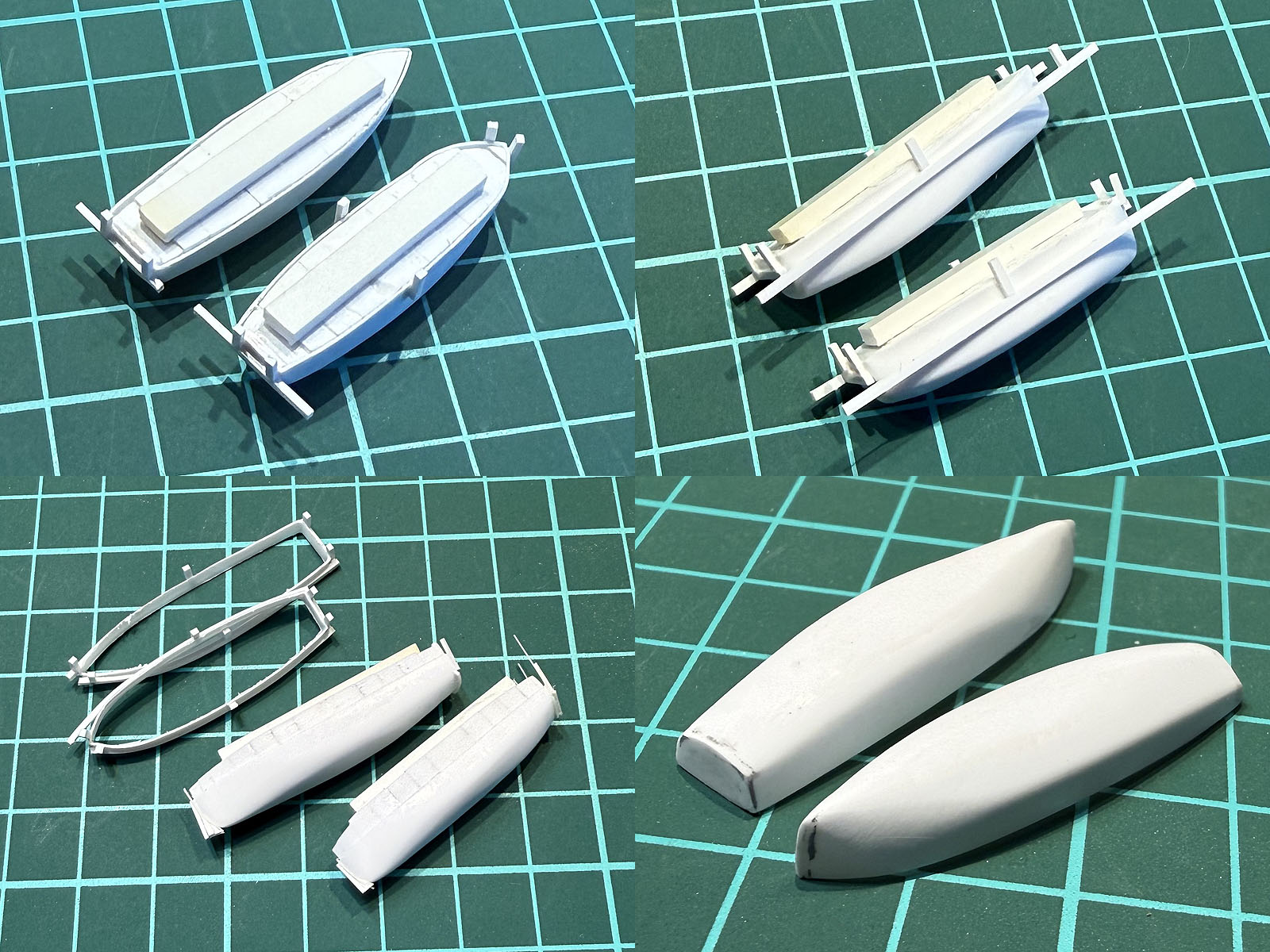
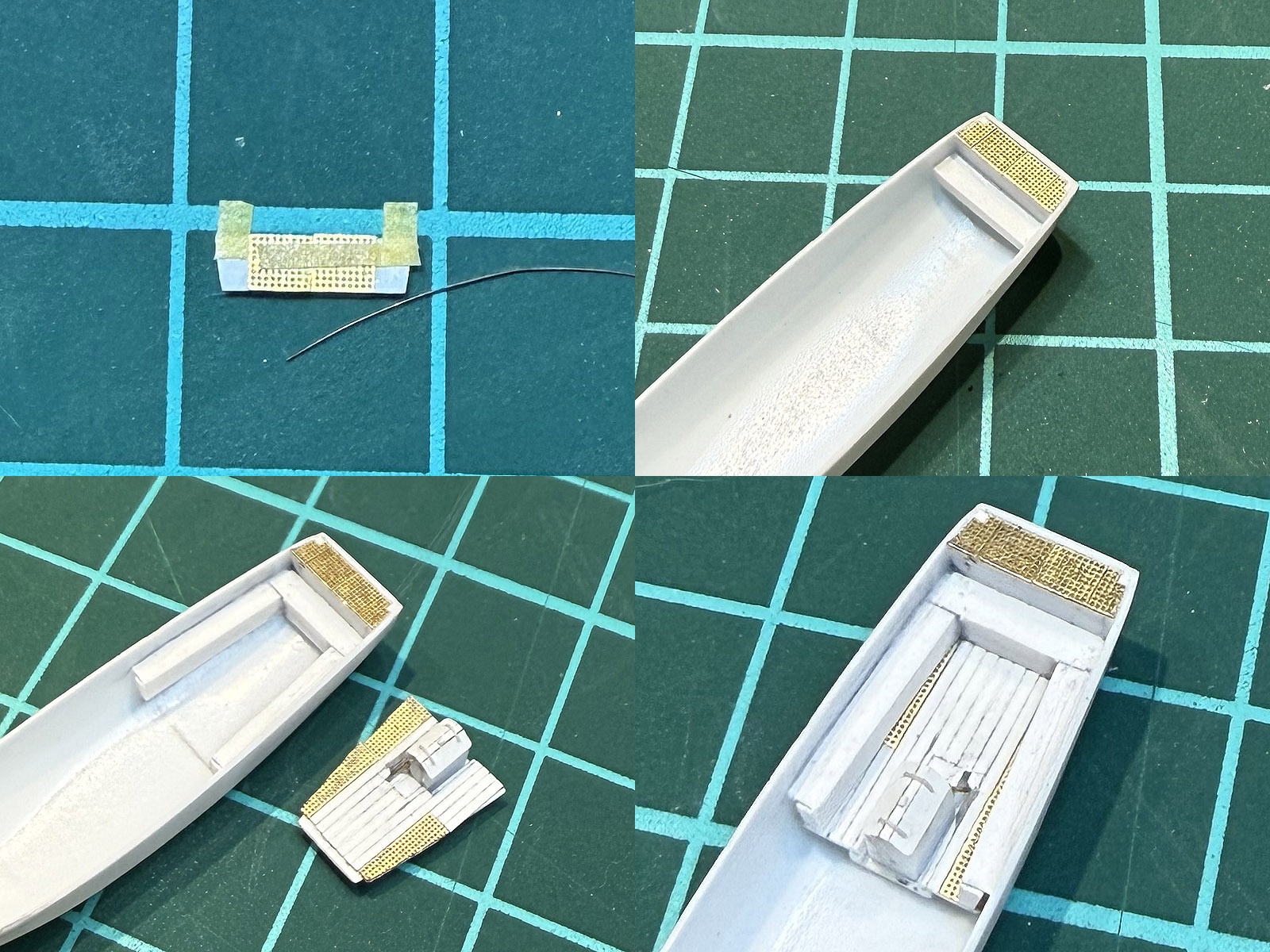


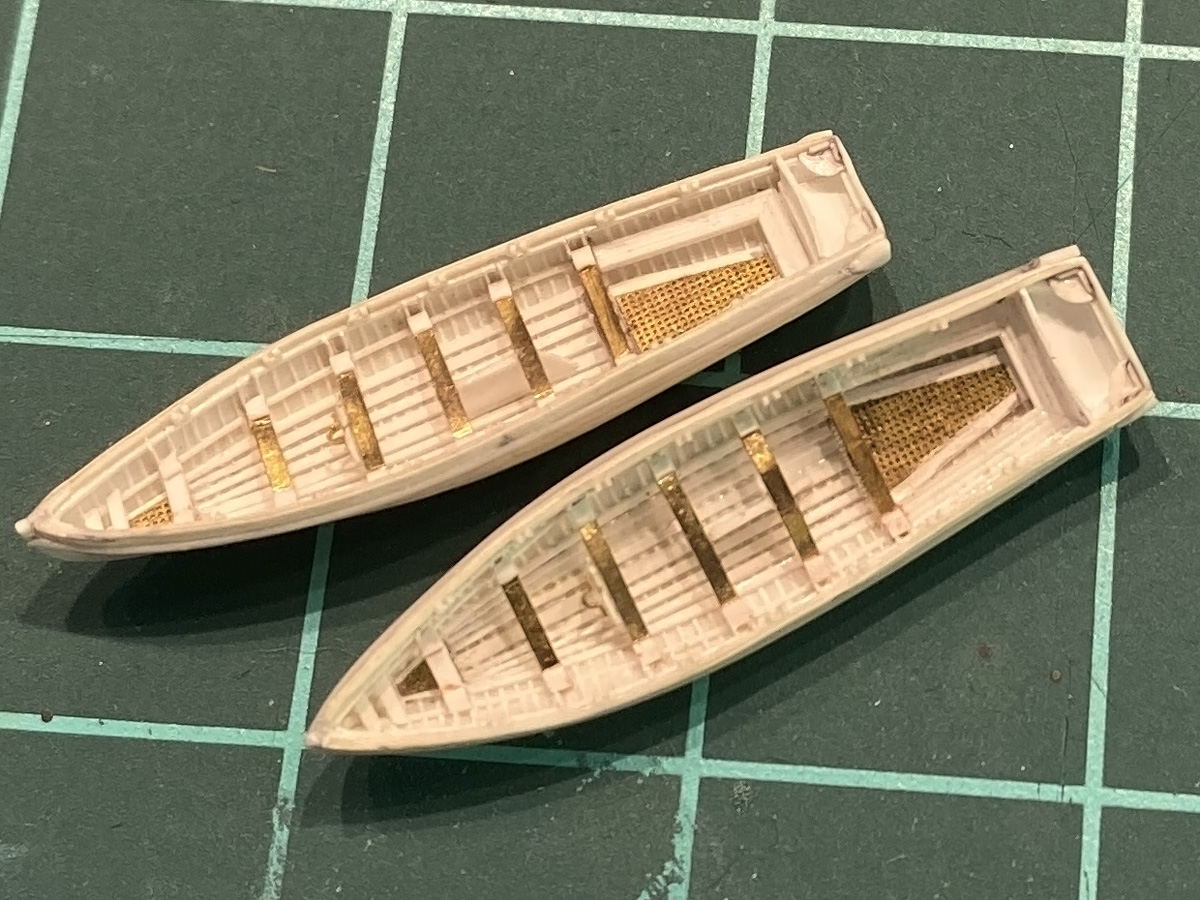
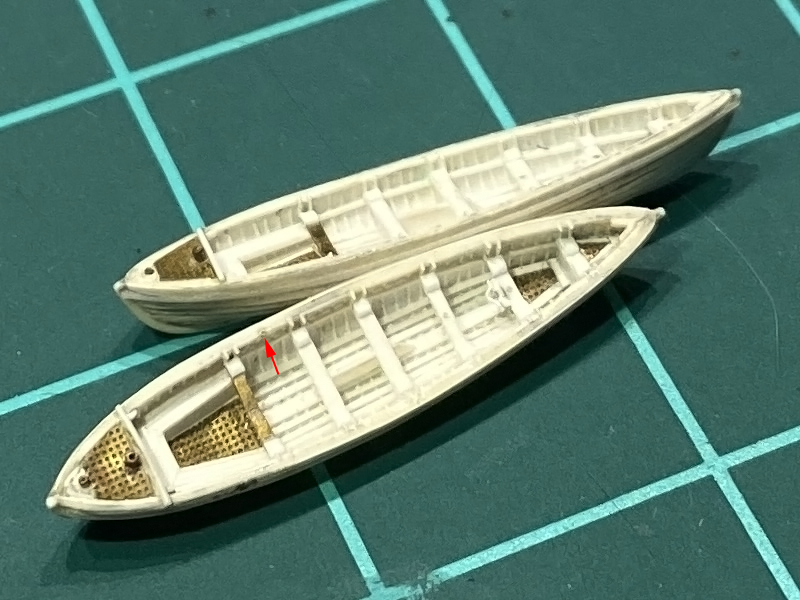
 As far as painting is concerned, will possibly use a very very mild wash for the interior and no shadow/highlighting each frame by brush to avoid going insane!